
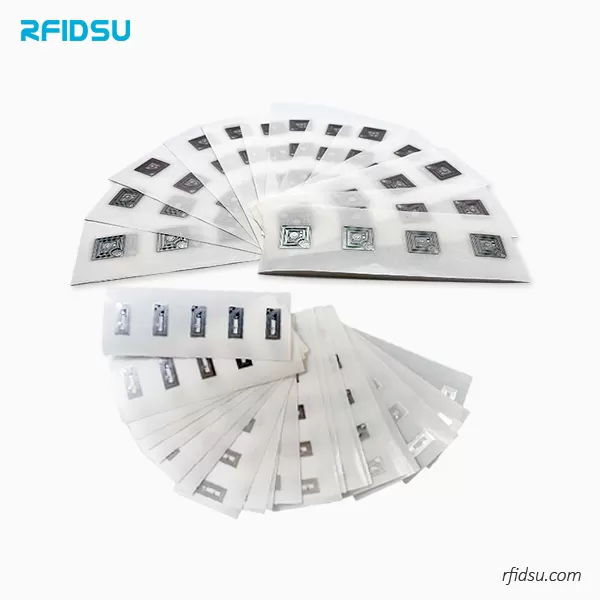
NFC paper sticker — self-adhesive smart label with embedded NTAG213 chip
What Are NFC Paper Stickers?
An NFC paper sticker is a thin, printable label with a Near Field Communication (NFC) chip and antenna embedded inside. The chip — most commonly NTAG213 — stores a small amount of data (a URL, serial number, or NDEF message) that is read when a customer holds an NFC-enabled smartphone within about 5 cm of the sticker. No app, no camera scan, no line of sight required.
A typical NFC paper sticker has three layers:
• The printable surface — paper or coated stock that accepts full-color logo and text printing, matching your existing label design.
• The inlay — the NFC chip and antenna bonded into a thin, flexible substrate.
• The adhesive backing — self-adhesive for peel-and-stick application onto boxes, bottles, cards, or product tags.
The key difference from a QR code: NFC chips carry a factory-programmed, read-only UID that cannot be cloned or reprinted. A QR code can be photographed and copied; an NFC sticker’s identity is locked at the silicon level.
Why Brands Are Switching from QR Codes to NFC
The global NFC smart label market reached USD 1.5 billion in 2025 and is projected to grow at an 18.4% CAGR through 2034, driven by anti-counterfeiting demand and the push for connected consumer experiences. Meanwhile, the fashion and consumer-goods industry loses more than USD 50 billion annually to counterfeit products. These two numbers explain why NFC is winning.
1. Authentication that cannot be copied. When a customer taps an NFC sticker, the phone reads the chip’s unique UID. A cloud backend checks that UID against a serialized record. If it matches, the product is genuine. A counterfeit sticker — even a visually perfect copy — fails this check because it cannot replicate the original UID.
2. A richer customer experience. A QR code opens a webpage. An NFC sticker can open a webpage, launch a loyalty reward, register a warranty, show a video, or redirect to a personalized offer — and the content can be updated on the backend without reprinting the sticker.
3. Zero friction. No camera to aim, no app to install, no lighting requirement. Tap and go. For luxury goods, premium packaging, and time-poor consumers, this frictionless interaction is the difference between a scanned code and an ignored one.
4. The EU digital product passport is coming. The EU’s Ecodesign regulation will require Digital Product Passports (DPPs) on many goods by 2030. NFC is one of the compliant data carriers — a tap can reveal material composition, origin, and recycling instructions. Brands adopting NFC stickers now are building the infrastructure ahead of the deadline.
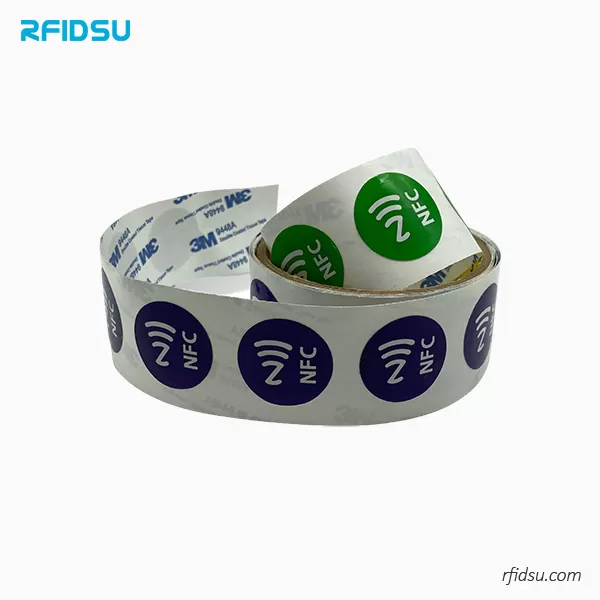
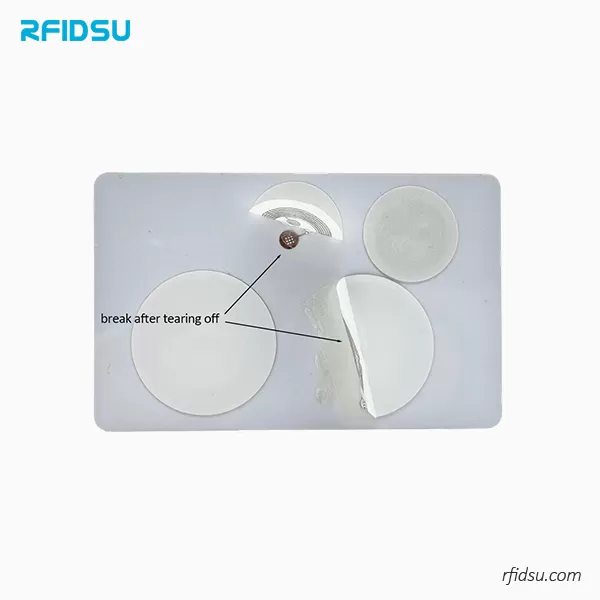
Left: custom full-color NFC stickers. Right: tamper-proof NFC sticker for authentication.
Common Applications
| Application | What the tap delivers |
| Product anti-counterfeiting | Real-time authenticity verification against a serialized cloud record |
| Smart packaging | Product info, usage guides, origin story, or recycling instructions |
| Brand marketing | Exclusive content, social media links, or limited-edition campaigns |
| Warranty registration | One-tap registration without filling forms |
| Loyalty programs | Tap to earn points or redeem rewards |
| Traceability | Production batch and supply-chain data for compliance |
Why Choose RFIDSU’s NFC Paper Stickers
Not all NFC stickers are engineered to the same standard. RFIDSU’s NFC paper stickers are built with the chip, antenna, and adhesive controlled in-house — which shows up in three concrete ways:
1. NTAG213 as the workhorse chip. With 144 bytes of user memory, NTAG213 is the industry standard for URL, serial number, and NDEF applications. It is natively readable by all modern Android phones and iPhone 7 and later, so your customers tap it without installing anything.
2. Full OEM customization. Custom shapes, sizes, full-color logo printing, serial numbers, and QR codes — all handled at the factory. Whether you need a tiny circular sticker for a cosmetics bottle or a rectangular label for a shipping box, the format is built to spec.
3. Factory pre-encoding. RFIDSU encodes each sticker with your URL, serialized number, or custom NDEF message before shipping. Stickers arrive plug-and-play — no in-house programming equipment, no batch-management software, no risk of inconsistent writes. Blank stickers are also available if you prefer to encode in-house.
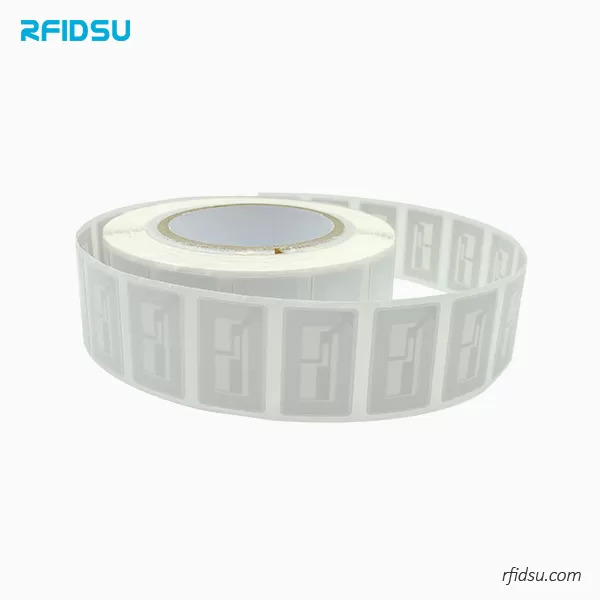
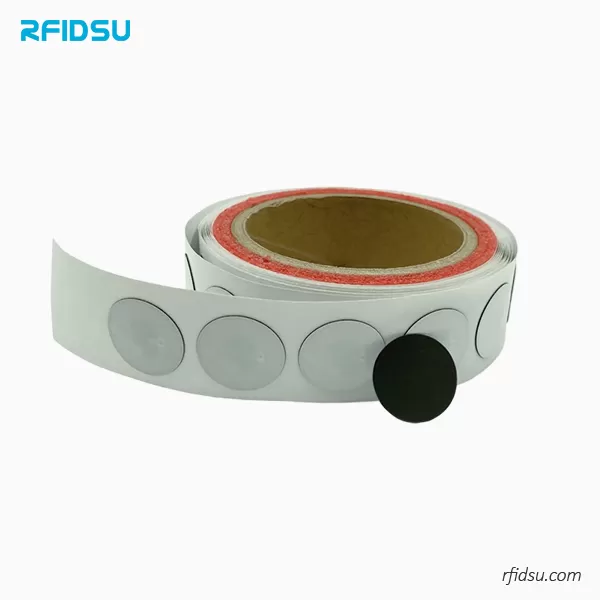
Left: printable blank NFC stickers. Right: anti-metal NFC option for metal surfaces.
A Quick Note on Metal Surfaces
Standard NFC stickers lose read range when applied directly to metal, because the conductive surface absorbs the RF signal. If your product is a metal tin, bottle, or device, ask for an anti-metal NFC sticker with a shielding layer. RFIDSU offers anti-metal variants that maintain a stable tap range even on metallic packaging — a detail that is easy to overlook and expensive to fix after a full production run.
Related reading: Browse the full range of custom NFC paper stickers — including waterproof, tamper-proof, and anti-metal options — on the RFIDSU product page for detailed specifications, chip options, and OEM customization.