
As the EU Digital Product Passport (DPP) moves forward, more companies are looking at product identification and tagging. Through the different tag projects we work on, we have found that customers want to know where the tag will be attached, whether it can be read reliably, and whether the cost makes sense at scale. So how do you choose the right tag and balance performance, suitability, and cost?
In this article
- DPP 2028: Why Start Preparing Product Identification Now?
- RFID, NFC, or QR Code: Which Is Right for DPP?
- One DPP, Many Products: How to Choose the Right RFID Tag
- DPP at Scale: How to Keep RFID Tag Costs Under Control
- Supporting DPP Projects Across Global Manufacturing Sites
1. DPP 2028: Why Start Preparing Product Identification Now?
The EU is rolling out Digital Product Passport requirements by product category. Rules for textiles, tyres, aluminium and other categories are planned for 2027, while furniture is planned for 2028. The final timelines will depend on the regulations ultimately adopted. Assessing product identification now leaves time for production planning, tag testing, and supply-chain coordination.
Price is only one factor. Bulk-reading needs, installation surfaces, exposure to water or metal, and whether consumers need to scan the tag with a phone all matter. It is best to start with the product’s real requirements rather than choose a tag first and try to make it fit.
2. RFID, NFC, or QR Code: Which Is Right for DPP?
QR codes, UHF RFID, and NFC can all connect physical products with digital information, but they work differently and suit different applications.
| Comparison | QR Code | UHF RFID | NFC |
|---|---|---|---|
| Reading method | Scanned with a camera | Read with an RFID reader | Read at close range by an NFC device |
| Dedicated reader required? | Usually not | Usually requires a UHF RFID reader | NFC-compatible phone or reader |
| Bulk reading | Not suitable for rapid bulk reading | Suitable for bulk identification and inventory checks | Usually read one item at a time at close range |
| Read range | The QR code must be visible and scannable | Depends on the tag, reader, and environment | Usually a few centimetres; depends on the device and tag |
| Cost considerations | Lowest cost | Worth prioritizing for evaluation in large-scale projects | Higher tag cost than UHF; depends on the chip and construction |
| Typical applications | Product information and packaging identification | Warehousing, inventory, production workflows, and bulk tracking | Smartphone interaction, product information access, and selected authentication scenarios |
Read the table by column, not by row: only UHF RFID supports rapid bulk reading over distance, only NFC is readable by a standard smartphone, and QR codes are the lowest-cost option but require line of sight. Most DPP programmes end up combining them — UHF or QR for back-of-house logistics, NFC where a person has to tap the product.
3. One DPP, Many Products: How to Choose the Right RFID Tag
Even when the same RFID technology is used, different products may need very different tag designs.
For example, a tag attached to a cardboard box has different requirements from one mounted on metal equipment or one that needs to withstand repeated washing as part of a work uniform. The materials, antenna design, and durability requirements can all vary.
Here are several common RFID tag options and the types of products and businesses that may want to consider them.
3.1 Standard UHF RFID Labels: For General Products and High-Volume Identification
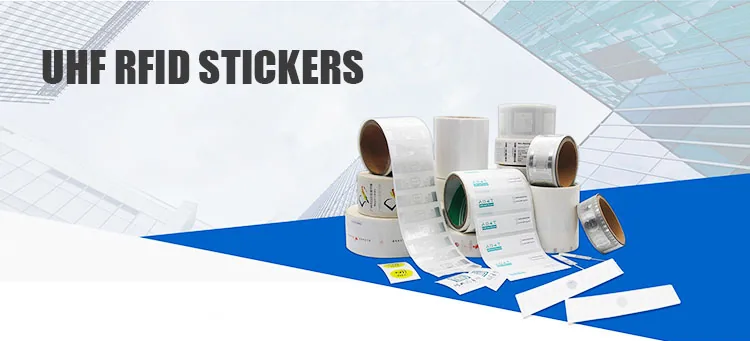
If a product has a conventional surface and does not require special heat resistance, washability, or on-metal performance, a standard adhesive RFID label is often a good option to evaluate first. These labels are easy to apply and suitable for high-volume processing and use.
Common applications include:
- Product packaging, cartons, and shipping packages;
- General retail goods and warehouse inventory;
- Identification on non-metal surfaces such as plastic and paper;
- Products that need to be read in bulk during production, warehousing, or logistics.
For manufacturers and brands that need to assign unique identities to large numbers of products, standard UHF RFID adhesive labels are often worth considering first. They are easy to convert and apply, work well for mass production, and can fit into existing label printing, encoding, and warehouse workflows.
Of course, standard adhesive labels are not suitable for every situation. If a tag needs to be attached to metal, placed close to liquid, or used in a more demanding environment, the antenna and tag construction need further evaluation. In these cases, RFIDSU recommends confirming the actual installation conditions before deciding whether a specialized tag is needed.
Suitable for: Apparel and general consumer-goods manufacturers, packaging companies, retail supply chains, warehousing and logistics businesses, and manufacturers that need RFID labels in large quantities.
3.2 PPS RFID Tags: For Industrial Products That Need Durability
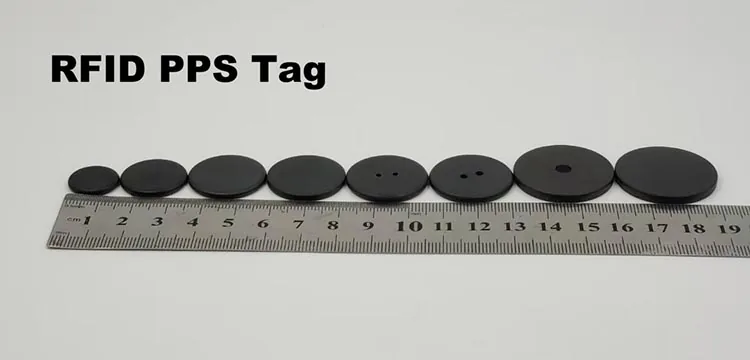
PPS is an engineering plastic with heat- and chemical-resistant properties. It is often used in industrial tag designs that require greater durability, including applications involving high temperatures and, for suitable tag designs, around 100–200 wash cycles.
Depending on the product design, these tags may be used for:
- Industrial equipment and components that need long-term identification;
- Products exposed to heat, moisture, or certain chemicals;
- Reusable assets and returnable containers or equipment;
- Specific washing and circulation-management applications.
For businesses that need a product identity to remain in place over time, tag lifespan and installation reliability are important. RFIDSU recommends confirming the required operating temperature, chemical exposure, installation method, and expected service life before selecting a suitable solution.
Suitable for: Industrial manufacturers, equipment makers, asset-management companies, and project customers with demanding environmental durability requirements.
3.3 Laundry and Textile RFID Tags: For Apparel, Hotel Linens, and Repeated-Wash Management
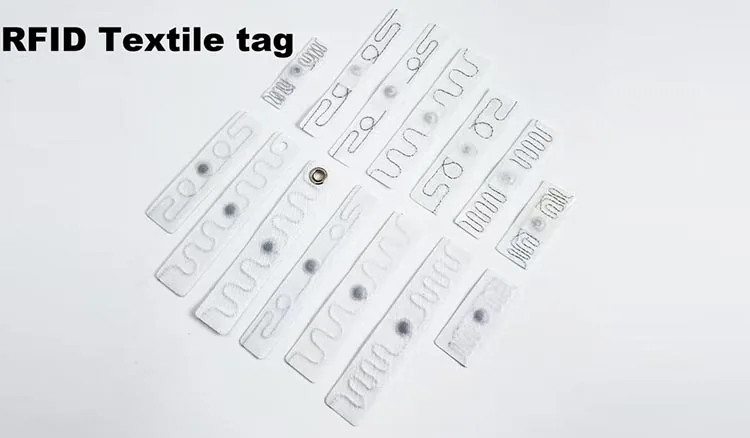
Textiles are an important area to consider in DPP discussions. For apparel brands and textile manufacturers, tags need to identify products while standing up to everyday wear, washing, and use. Workwear and hotel linens may go through repeated wash cycles, so choosing a tag involves more than just size and price.
Common applications include:
- Workwear and uniforms;
- Hotel sheets, towels, and other hospitality linens;
- Medical or industrial textiles;
- Textiles that need repeated washing, sorting, and inventory checks;
- Textile products that need to be identified during production, use, and recycling.
For businesses that need bulk inventory checks and circulation management, UHF laundry RFID tags can improve identification efficiency and reduce the need to locate and manually record each item. That is why, when discussing laundry-tag projects, RFIDSU pays particular attention to the tag attachment method and the actual washing conditions.
When selecting a tag, consider its size, whether it will be sewn in or embedded, washing temperature, mechanical stress, and the effect of installation on read performance.
Suitable for: Apparel brands, uniform suppliers, hotel-linen managers, industrial laundry services, and businesses that need to track textile circulation.
3.4 On-Metal RFID Tags: For Metal Equipment, Tools, and Industrial Assets
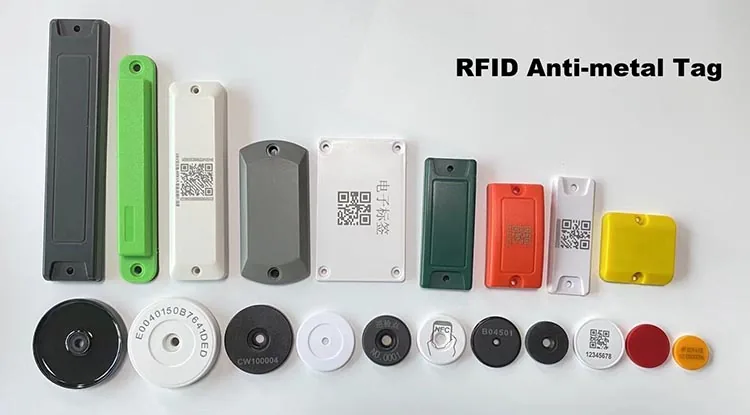
Metal surfaces are a common challenge when selecting RFID tags. When a standard tag is attached directly to metal, its read performance can be affected, resulting in a shorter read range or inconsistent readings. At RFIDSU, we use specialized antenna designs and optimized tag constructions to help tags work on different metal surfaces.
Common applications include:
- Industrial equipment and machinery;
- Metal tools, moulds, and returnable assets;
- Metal containers and equipment components;
- Metal assets that need to be identified in warehouse or production environments.
For manufacturers managing large numbers of metal assets, UHF anti-metal tags can support bulk inventory checks and asset tracking. If staff only need to read one item at close range, an NFC on-metal tag may also be worth evaluating, depending on the application.
When choosing a tag, confirm whether it will be mounted on steel, aluminium, or another metal; how much installation space is available; whether it will be used outdoors; and what read range is required.
Suitable for: Industrial equipment manufacturers, automotive-parts companies, tool-management teams, factory asset-management teams, and manufacturers that need to track metal products.
3.5 NFC Tags: For Smartphone Interaction, Product Information, and Specific Anti-Counterfeiting Applications
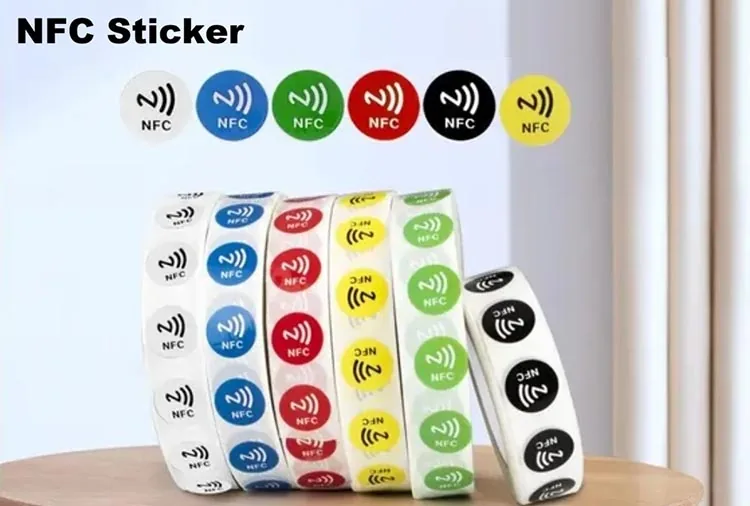
If smartphone reading and consumer interaction are priorities, NFC is worth considering. NFC tags can be read at close range by NFC-compatible smartphones, including Android phones and iPhones. This makes NFC a good fit for applications where consumers, staff, or service teams actively tap a tag to access information.
Examples include:
- Accessing product information for clothing, footwear, and accessories;
- Digital interactions with branded products;
- Product instructions, user guides, and after-sales service portals;
- Authentication and anti-counterfeiting applications for selected products;
- Products that provide access to digital content through a smartphone.
RFIDSU can encode URLs or associate unique codes with NFC tags, allowing users to access product-information pages with a phone. If a project requires stronger security verification, secure NFC chips with cryptographic authentication features, such as NTAG 424 DNA, can also be evaluated. It is important to distinguish standard NFC tags from secure NFC tags with dynamic authentication. The right anti-counterfeiting solution depends on the chip’s capabilities and the project’s specific requirements.
Suitable for: Apparel and footwear brands, consumer-goods brands, premium and high-value product manufacturers, and businesses looking for smartphone interaction or specific anti-counterfeiting features.
4. DPP at Scale: How to Keep RFID Tag Costs Under Control
When a project grows from a few hundred samples to tens or hundreds of thousands of products, or more, tag cost naturally becomes an important purchasing consideration. We understand that customers need tags that meet their requirements while keeping the overall budget reasonable.
At RFIDSU, we believe cost control is not simply about finding the lowest unit price. It is about avoiding features you do not need while making sure the tag works properly in its actual environment.
To help us narrow down the options more quickly, it is useful to include the following details when requesting a quotation:
- Product material and tag installation location;
- Estimated order quantity;
- Whether you need bulk reading or close-range smartphone reading;
- Any requirements for water, heat, washing, or on-metal performance;
- Whether unique encoding, URL programming, or specific security-authentication features are required;
- The country or factory where the tags need to be delivered.
With this information, we can evaluate tag construction and technology more precisely. That is usually more useful than comparing unit prices alone.
5. Supporting DPP Projects Across Global Manufacturing Sites
Many brands sell their products in one market while manufacturing them in another. For companies with multiple production sites, getting tags to the right factory in line with the production schedule is also an important part of putting a project into practice.
For example, a brand may be based in Europe, with products made in China, assembled in Vietnam, or manufactured by a supplier in India. Shipping tags directly to the actual production site according to the order and logistics plan can help purchasing and production run more smoothly.
RFIDSU specializes in customized RFID and NFC tags, based on each customer’s products, operating environment, and production schedule, we help evaluate suitable materials, sizes, chips, and processing options. We can customize tags to meet project requirements and support the required encoding. If tags need to be delivered directly to a production site, we can also arrange shipments to factories or other designated delivery locations in China, Vietnam, India, and elsewhere, depending on the order and logistics plan.
Looking for the Right RFID Tag for Your DPP Project?
If you are evaluating RFID or NFC tags for a DPP project, whether you are developing a new product or preparing for a large-volume order, tell us a little about your application. Helpful details include the product type, tag installation location, estimated quantity, operating environment, and the country or factory where the tags need to be delivered. The RFIDSU team can use this information to confirm the specifications and prepare a quotation.
RFIDSU | Custom RFID & NFC Tag Solutions for Global Manufacturing